

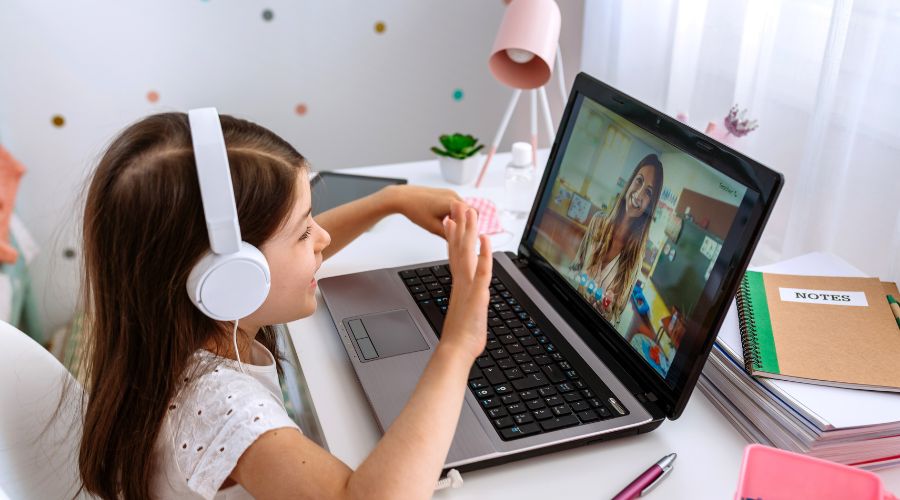
Technology has transformed nearly every part of modern life, including how children think, process information, communicate, and learn. From tablets and smartphones to gaming platforms, social media, AI-powered apps, and virtual classrooms, today’s students are growing up in a completely different cognitive environment than previous generations.
While technology creates incredible opportunities for education and online tutoring, it also presents new challenges for attention spans, memory retention, focus, and learning behavior. Parents, educators, and online tutors are beginning to notice major shifts in how children absorb information and respond to traditional learning methods.
As online tutoring continues growing across Canada and globally, understanding how screen time affects the brain has become increasingly important for supporting student success.
The Rise of Digital Learning and Online Tutoring
Online tutoring has expanded rapidly over the last several years. Students now have access to personalized academic support from home through video calls, interactive learning platforms, digital whiteboards, AI tools, and virtual classrooms.
For many families, online tutoring provides:
- Flexible learning schedules
- One-on-one academic support
- Reduced travel time
- Personalized learning experiences
- Access to specialized educators
- Comfortable home learning environments
Modern online tutoring can be highly effective when used correctly. However, students today are also spending more time on screens than ever before, and that constant digital stimulation may affect how their brains process information.
How Technology Is Shaping Children’s Brains
Children’s brains are highly adaptable during development. Neuroscience research shows that repeated behaviors and environments influence neural pathways, attention systems, and cognitive habits over time.
Today’s digital environments are designed around speed, stimulation, instant feedback, and rapid information consumption. Apps, games, videos, and social platforms constantly compete for attention through notifications, scrolling, rewards, and short-form content.
As a result, many educators and parents are noticing changes such as:
- Shorter attention spans
- Difficulty focusing during longer tasks
- Increased multitasking habits
- Reduced patience during problem solving
- Faster information scanning rather than deep reading
- Higher dependence on stimulation and entertainment
This does not mean technology is “bad.” Instead, it means learning environments must evolve alongside cognitive changes happening in younger generations.
Screen Time and Attention Span Research
Several studies have explored the relationship between excessive screen exposure and cognitive performance in children and teenagers.
Research published through organizations such as the American Academy of Pediatrics and cognitive neuroscience studies suggests that excessive recreational screen time may contribute to:
- Reduced concentration
- Sleep disruption
- Increased mental fatigue
- Lower academic performance
- Difficulty retaining information
- Decreased reading comprehension
Fast-paced digital content conditions the brain to expect constant stimulation. Traditional classroom environments or long homework sessions may feel slower and more difficult for students who are heavily exposed to rapid digital entertainment.
This is one reason many students struggle with independent studying or sustained academic focus.
Why Online Tutoring Can Still Be Extremely Effective
Interestingly, online tutoring itself is not necessarily the problem. In fact, structured online tutoring can help counter many modern learning challenges when designed properly.
Research from the U.S. Department of Education found that students in structured online learning environments often performed better, on average, than students receiving only traditional face-to-face instruction, especially when personalized learning methods and one-on-one support were included.
High-quality online tutoring creates:
- Personalized instruction
- Interactive engagement
- Reduced classroom distractions
- Immediate feedback
- Flexible pacing
- One-on-one support
- Adaptive teaching methods
Studies have also shown that individualized tutoring can significantly improve academic performance. According to educational research from the National Bureau of Economic Research (NBER), high-impact tutoring programs can produce measurable gains in math and reading performance, particularly for students struggling academically.
Students who struggle in large classroom environments may actually perform better in focused online tutoring sessions with individualized support. One-on-one digital learning allows tutors to adjust pacing, revisit concepts immediately, and reduce social pressure that some students experience in traditional classrooms.
The key difference is intentional learning versus passive screen consumption.
Watching endless short-form entertainment content affects the brain differently than actively participating in structured educational activities. Research in cognitive psychology suggests that passive digital consumption — such as rapid scrolling, short-form video content, and multitasking across apps — can reduce sustained attention and increase cognitive fatigue over time.
In contrast, guided educational engagement activates different cognitive processes, including active recall, problem-solving, comprehension, and long-term memory formation.
Statistics also show how heavily modern students rely on digital environments:
- Children between ages 8–12 now average approximately 4–6 hours of daily screen time outside of schoolwork.
- Teenagers often exceed 7–9 hours per day of recreational screen exposure.
- Research from Common Sense Media found that excessive passive screen use may negatively affect sleep quality, focus, and academic consistency.
However, educational screen time used intentionally for tutoring, collaboration, and active learning produces very different outcomes compared to passive entertainment consumption.
This is why modern online tutoring programs must focus on engagement, interaction, accountability, and personalized teaching rather than simply placing students in front of another screen.
Gaming, XR/VR, and the Future of Learning
Emerging technologies such as gaming-based education, XR (Extended Reality), VR (Virtual Reality), and interactive simulations are also reshaping education.
These technologies can improve:
- Engagement
- Spatial learning
- Interactive problem-solving
- Visual memory
- Experiential learning
However, they also raise important questions about balance, cognitive overload, and overstimulation.
As technology continues evolving, educators and tutors must understand both the benefits and risks of digital learning environments.
Students today are not learning the same way students learned twenty years ago. Modern educational support must adapt to changing cognitive habits while still helping students build critical thinking, concentration, reading comprehension, and long-term learning skills.
Supporting Healthier Learning Habits for Students
Parents and educators can help students develop healthier relationships with technology by encouraging:
- Structured screen time
- Reading away from devices
- Regular breaks during studying
- Interactive discussions
- Physical activity
- Consistent sleep schedules
- Reduced multitasking
- Focused learning environments
Online tutoring programs that balance engagement with concentration can help students strengthen attention spans while improving academic confidence.
The Future of Education Requires Balance
Technology will continue shaping education, careers, communication, and childhood development. The goal is not to eliminate technology, but to use it intentionally and responsibly.
Online tutoring, when combined with strong teaching strategies and healthy digital habits, can provide powerful educational support for modern students navigating increasingly digital environments.
At QLearning School, online tutoring programs focus on personalized learning experiences designed to help students improve academically while adapting to the evolving challenges of modern education.
Ready to Support Your Child’s Learning in a Digital World?
Modern technology is changing how students focus, learn, and process information. Personalized online tutoring can help children build stronger learning habits, improve confidence, and stay academically engaged in today’s fast-paced digital environment.
Whether your child needs academic support, improved focus, or structured one-on-one learning, QLearning School provides personalized online tutoring designed around modern student needs.

Tanya Pachkalov
Tanya Pachkalov researches how modern technology, gaming environments, social media, and screen exposure are changing the way children focus, process information, and learn online.
Her background combines computer science, XR/VR technologies, gaming creation, digital marketing, and behavioral research related to modern online tutoring and learning environments.
Frequently Asked Questions About Screen Time, Technology & Online Tutoring
Frequently Asked Questions
Excessive recreational screen time may affect attention span, concentration, sleep quality, and information retention. Fast-paced digital content can make it harder for some students to focus during traditional learning activities.
Yes. Structured online tutoring can be highly effective when sessions are interactive, personalized, and designed to keep students engaged. One-on-one tutoring often helps reduce distractions and improve learning confidence.
Educational screen time involves active participation, problem-solving, communication, and guided learning. Entertainment screen time is usually passive and focused on quick stimulation, scrolling, or short-form content consumption.
Personalized online tutoring may help students improve focus by reducing classroom distractions and adapting lessons to individual learning styles and pacing.
The impact depends on the type of content, age of the child, sleep habits, and overall balance. Many experts recommend balancing educational technology with physical activity, reading, social interaction, and offline learning activities.
Modern students grow up surrounded by smartphones, gaming, social media, and constant digital stimulation. This changes how they process information, maintain attention, and engage with learning environments.
Yes. Interactive technologies such as gaming, XR/VR, and digital simulations can improve engagement, visual learning, creativity, and problem-solving when used intentionally and in moderation.
Parents can encourage structured routines, regular breaks, reduced multitasking, healthy sleep schedules, offline activities, and balanced educational screen use to support long-term learning and focus.
Many parents prefer online tutoring because it offers flexible scheduling, individualized support, reduced travel time, and learning environments tailored to the student’s needs.
Online tutoring allows instructors to adapt lessons, pacing, and teaching methods to individual students. Some children feel more comfortable learning in one-on-one virtual environments compared to larger classroom settings.