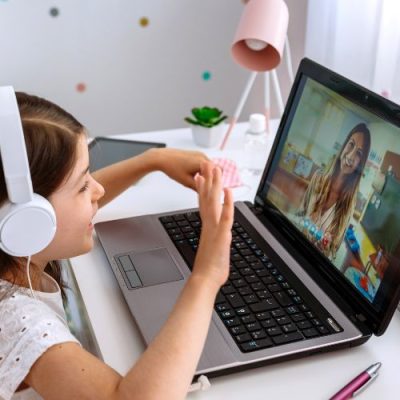


What the Research Says About Online ABA Coaching for Children and Families
Over the last several years, virtual ABA (Applied Behavior Analysis) services have moved from being a temporary solution to becoming a widely accepted and research-supported model of care. As telehealth expanded globally, many families began asking an important and understandable question:
Can ABA therapy delivered virtually truly make a meaningful difference for children?
The answer, supported by peer-reviewed research and clinical outcomes, is yes — when implemented correctly, virtual ABA coaching can be highly effective, particularly when caregivers are actively involved.
Understanding Virtual ABA Coaching
Virtual ABA services use secure telehealth platforms to deliver structured behavioral support directly into a family’s home environment. Rather than replacing traditional therapy entirely, virtual ABA often emphasizes parent coaching, strategy implementation, emotional regulation support, communication development, and functional behavior planning.
One of the most important distinctions is that virtual ABA is not simply “therapy over a screen.” It is typically a guided, interactive model where caregivers are coached in real time to apply evidence-based strategies within natural daily routines.
What Does the Research Actually Show?
Virtual ABA is not experimental. It has been studied extensively, particularly in the context of parent-mediated intervention.
A 2017 study published in the Journal of Applied Behavior Analysis (JABA) evaluated telehealth parent training for children with autism who exhibited challenging behaviors. The results demonstrated that parents who received coaching through telehealth significantly improved their ability to implement behavioral strategies with high fidelity. More importantly, reductions in problem behaviors were maintained over time. Researchers concluded that telehealth delivery produced outcomes comparable to in-person training.
A 2020 review published in Behavior Analysis in Practice analyzed multiple telehealth ABA models and found consistent improvements in functional communication skills, decreases in disruptive behaviors, and high levels of caregiver satisfaction. The review emphasized that treatment outcomes remained strong when services were structured, data-based, and delivered by trained professionals.
In addition, broader telehealth research reported by the Centers for Disease Control and Prevention (CDC) indicates that telehealth services expanded access to behavioral and developmental care without compromising quality when fidelity of implementation was maintained.
Why Virtual ABA Can Be Particularly Effective
One of the most powerful advantages of virtual ABA coaching is that it occurs in the child’s natural environment. Behavioral science consistently shows that skills generalize more effectively when taught and reinforced in real-life contexts rather than in artificial clinical settings.
For example, when a child practices emotional regulation strategies during an actual homework routine or learns communication skills during real sibling interactions, those behaviors are more likely to transfer across situations.
Research also highlights the importance of caregiver involvement. A 2021 study published in Autism: The International Journal of Research and Practice found that caregiver-mediated interventions delivered virtually increased parent confidence, improved strategy consistency, and led to measurable behavioral improvements in children. When parents are trained to understand reinforcement, prompting, and skill-building principles, progress often becomes more sustainable.
Measurable Outcomes in Telehealth ABA
Across multiple peer-reviewed studies, telehealth ABA services have been associated with:
Significant reductions in challenging behaviors
Increased functional communication skills
Improved parent implementation accuracy
High caregiver satisfaction rates (often above 90%)
Sustained treatment gains at follow-up
These findings are especially relevant for families facing barriers to in-person services, such as long waitlists, geographic isolation, transportation limitations, or complex scheduling demands.
Addressing Common Concerns
A common misconception is that virtual ABA requires children to sit passively in front of a screen. In practice, sessions are interactive and movement-based. The professional provides live coaching while caregivers implement strategies in real time. Activities often involve physical prompting, reinforcement systems, environmental modifications, and brief structured engagement — not extended screen exposure.
Another concern parents raise is whether rapport can be built virtually. Research on telehealth therapeutic alliance suggests that strong relationships can be formed when sessions are structured, responsive, and individualized. Many families report feeling more comfortable with learning strategies within their own home environment.
When Is Virtual ABA Most Effective?
Virtual ABA tends to be most effective when:
A caregiver is available and willing to participate
Goals target functional daily routines
Providers are trained in telehealth delivery
Progress is tracked using objective data
For children with highly intensive behavioral needs, a hybrid model that combines in-person and virtual support may be recommended. However, for many families — particularly those seeking coaching in emotional regulation, executive functioning, communication skills, and routine stabilization — virtual ABA can be both practical and powerful.
The Bigger Picture: Access and Equity
It is important to note that approximately 1 in 36 children in the United States is identified with autism spectrum disorder, according to recent CDC data. Yet access to ABA services remains uneven, especially in rural and underserved communities.
Telehealth models reduce these disparities by expanding access to qualified professionals regardless of geographic location. This access component alone makes virtual ABA an important and necessary evolution in behavioral care.
Final Perspective: Does Virtual ABA Really Help?
The evidence indicates that virtual ABA coaching is not merely a convenience — it is a research-supported, outcome-driven model that can produce meaningful improvements in behavior, communication, and caregiver confidence.
When implemented with clinical integrity, structured data tracking, and collaborative family involvement, virtual ABA services can:
Improve emotional regulation
Reduce challenging behaviors
Strengthen communication skills
Empower caregivers
Increase long-term independence
For many families, it offers a flexible and effective path forward.
For families considering virtual ABA support, choosing the right provider matters. At QLearning, our virtual ABA coaching sessions are designed to be practical, collaborative, and rooted in evidence-based practice. We focus on empowering caregivers with clear strategies that can be applied immediately within daily routines, while also supporting children in building emotional regulation, communication, and executive functioning skills. Every session is structured around measurable goals, guided by behavioral data, and tailored to your child’s unique profile. If you are looking for flexible, research-informed ABA support delivered directly into your home environment, our virtual coaching services provide a supportive and results-driven pathway forward.
Ready to Support Your Child with ABA?
Get personalized virtual ABA coaching designed to improve emotional regulation, communication skills, and daily routines. Your first consultation is completely free.
Frequently Asked Questions About Autism Learning Support Online
Frequently Asked Questions
Yes, virtual ABA can be effective—especially for parent coaching, behavior support in daily routines, communication goals, and emotional regulation. Outcomes are strongest when sessions are structured, caregivers participate, and goals are practiced in real-life settings at home.
Virtual ABA coaching is ABA support delivered through secure video sessions. A clinician teaches and guides strategies, and caregivers practice them in real time during everyday routines (homework, transitions, bedtime, social skills, etc.).
It can be equally effective for many goals, but it depends on the child’s needs. Virtual ABA often works best for parent training, routine-based behavior plans, and skill generalization at home. Some children may benefit from a hybrid plan (virtual + in-person).
Common goals include emotional regulation, reducing tantrums or aggression, improving transitions, functional communication, daily routines (morning/bedtime), toileting support, picky eating strategies, homework tolerance, and social skills.
That’s common—and not a dealbreaker. Many virtual ABA sessions are parent-led and activity-based. The child doesn’t need to “sit still”; the clinician coaches you through short tasks, reinforcement, breaks, and movement-based routines.
Coverage depends on your provider and location. Some plans cover telehealth ABA services, while others require in-person sessions. We recommend checking your benefits and asking specifically about “telehealth ABA” or “virtual behavior therapy.”